How to remember vocabulary more effectively? 3 research-backed techniques
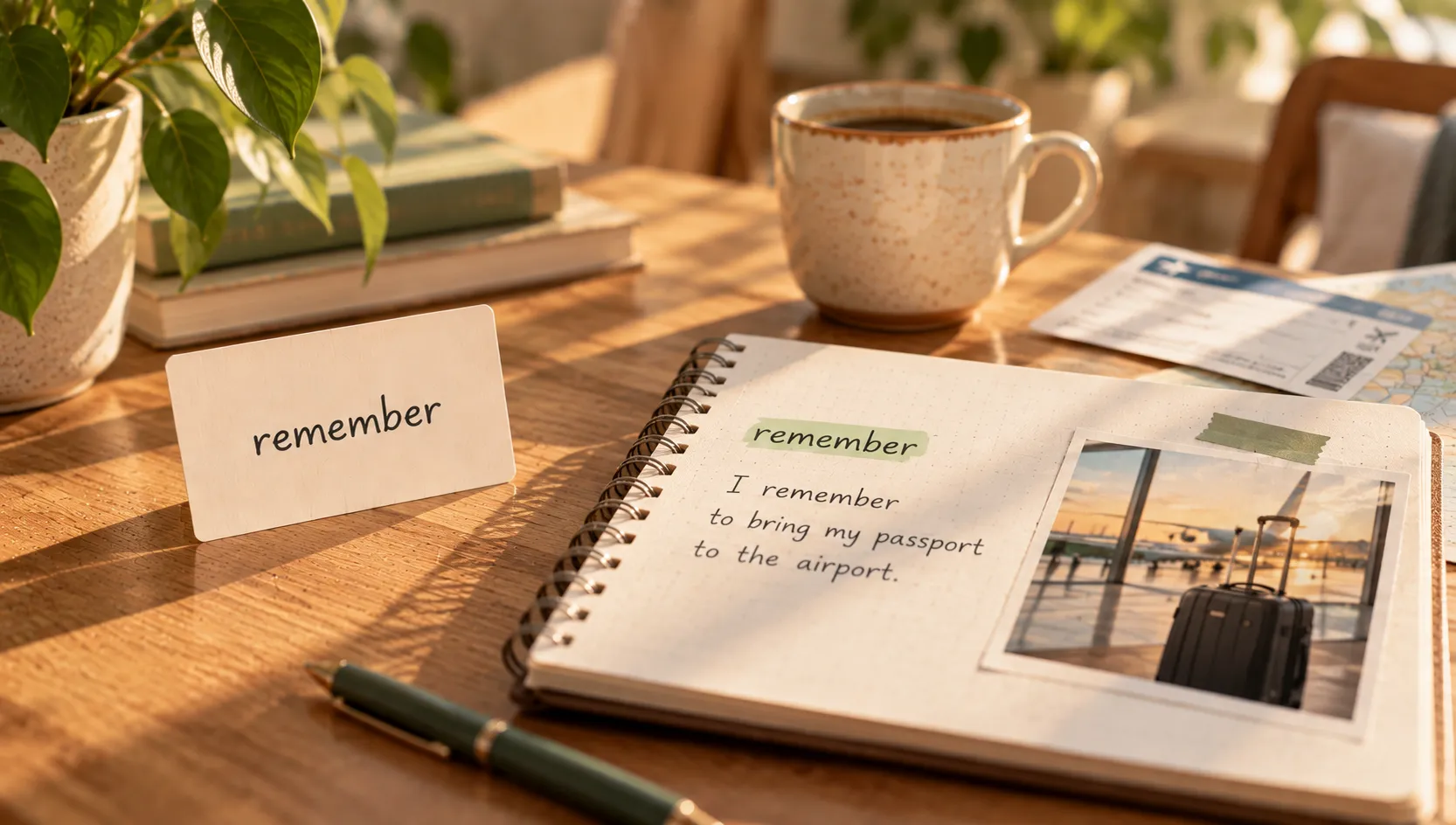
You learn new words, and a week later half of them are gone? It's not a matter of a "bad memory." The way you review vocabulary decides whether it stays with you for years. Here are three techniques with solid grounding in research on learning.
Before we get to the specifics, one important thought: the brain remembers what it actively uses, not what it passively looks at. Recopying word lists gives the illusion of progress — real retention looks different.
Spaced repetition
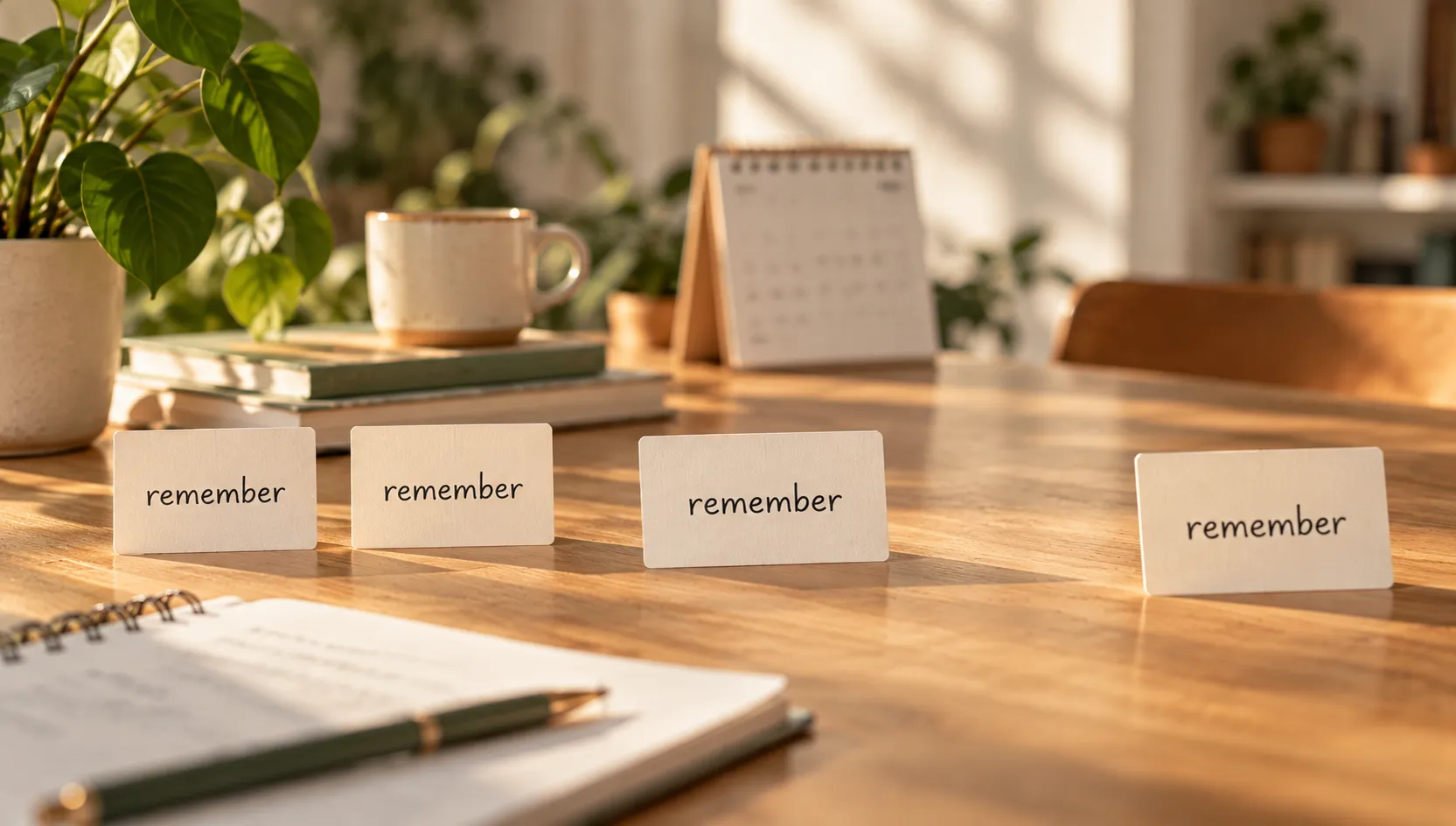
Instead of cramming 50 words in one evening, spread your reviews over several days. The spacing effect means that each new reminder, right before the moment of forgetting, strengthens the memory trace more powerfully than a review "while it's still fresh."
In practice: review a new word after a day, after three days, after a week, after a month. LingEase keeps track of these intervals for you and surfaces words exactly when you're starting to lose them.
It's not about how many times you see a word, but how many times you have to recall it with effort.
Learn words in context, not in isolation
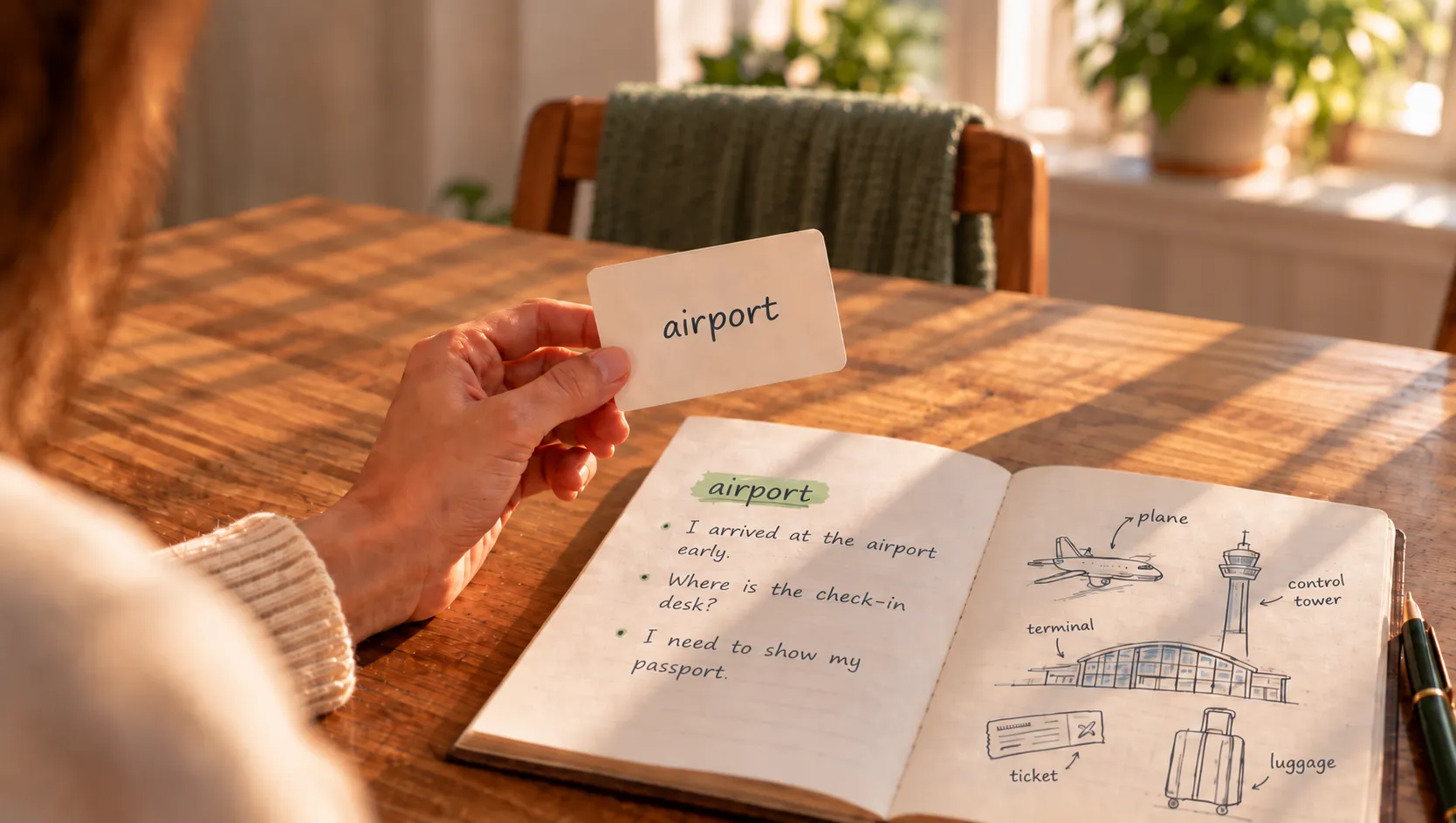
A single word on a list is an abstraction. That same word in a sentence that means something to you gains an anchor — an image, an emotion, a situation. That's why conversation is so effective: every new word appears in use right away.
Active recall instead of passive reading
Force yourself to retrieve a word from memory before you see it. That effort is exactly the moment when you learn the most. Three simple ways to do it every day:
- 1.
Cover the translation
Look at the word and recall its meaning before you check. Reverse the direction too — from your native language into the target one.
- 2.
Use the word in a sentence
Build a sentence with the new word yourself — ideally about you. Your own context is remembered many times better.
- 3.
Say it out loud
Speaking combines auditory and motor memory. In a conversation with LingEase you do it naturally, along the way.
Combine all three into one
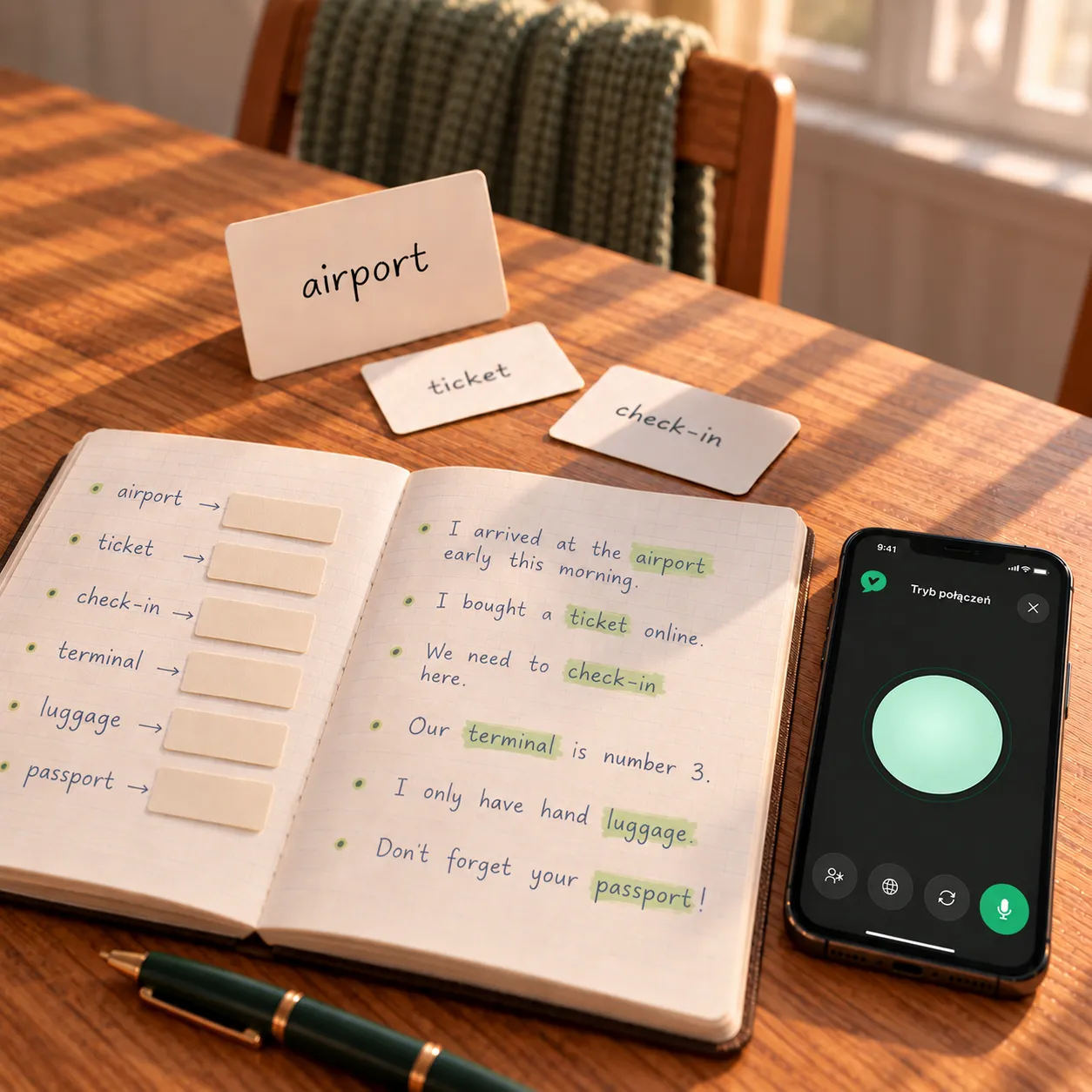
The best results come from combining them: spaced reviews, words in context, and active recall. Conversation naturally brings all three together at once — which is why speaking cements vocabulary faster than any list.
You don't need the perfect method — you need one you'll stick with. Pick a single technique, use it today, and let the spacing do the rest.
Learn words in conversation, not from lists
LingEase surfaces words exactly when you're starting to forget them — and right away in the context of a conversation.